BOMAG Plate Compactor Buying Notes: Parts Diagrams, Price Reality, and One $890 Mistake
-
Short answer first: what actually matters when you're buying a BOMAG plate compactor
-
Why you should take this with a grain of salt (and also why you shouldn't)
-
What a BOMAG parts diagram is actually for
-
The price question nobody answers straight
-
Quick detour: what is an excavator, and why it keeps showing up
-
An industry-evolution note, because this part genuinely changed
-
When this advice doesn't apply
Short answer first: what actually matters when you're buying a BOMAG plate compactor
If you're searching for a bomag plate compactor for sale, the machine's sticker price is the least important number on the page. The three things that decide whether you regret the purchase are: whether you can get the correct bomag parts diagram for that exact serial number, whether your local dealer actually stocks wear parts, and whether you've run the thing for ten minutes before money changes hands. Everything else — color, marketing copy, the salesman's opinion of the competition — is noise.
I'm not saying price doesn't matter. I'm saying I've watched people save $600 on the front end and lose $1,400 on the back end because they couldn't source a simple exciter bearing. That math is pretty consistent.
Why you should take this with a grain of salt (and also why you shouldn't)
I've been handling equipment and parts orders for going on eight years now. Not as a dealer — as the person on the contractor side who has to make the machine work and eat the cost when it doesn't. In that time I've personally made and documented maybe a dozen significant purchasing mistakes, and the total damage is somewhere around $11,000 in wasted budget and rework. Don't hold me to the exact figure; I stopped counting after the third year.
In 2019 I ordered a replacement plate for a BOMAG single-direction vibratory plate. I pulled the part number off a parts diagram I found online. It looked right. It was not right. The diagram was for a different model year, and the mounting holes were off by about 8mm. That mistake cost $890 in redo, shipping both directions, and a one-week delay on a small patio job.
Here's the part that stings: the diagram was a genuine BOMAG diagram. It was just the wrong one for my machine. The lesson wasn't "avoid online diagrams." The lesson was "match the diagram to the serial number, not the model name."
What a BOMAG parts diagram is actually for
People think a parts diagram is a shopping tool. It isn't. It's a verification tool. The exploded view is there so you can confirm that the part you're about to order matches the assembly in front of you — bolt pattern, casting shape, hose routing, all of it.
Three habits that have saved me since 2019:
- Serial number first. Every BOMAG machine has one, and the parts catalog is built around it. Model name alone will bite you across production-year changes.
- Cross-check the callout number, not just the part number. If the diagram shows item 14 as the exciter housing, make sure the part number you're ordering is listed against item 14 for your serial range.
- Ask the dealer to confirm fitment in writing. Most will. The ones who won't are telling you something.
One counterintuitive thing: a cleaner, higher-resolution diagram isn't necessarily a more accurate one. Some of the best scans I've used are grubby photocopies from a dealer's binder, because they came with the right serial-range annotation handwritten in the margin.
The price question nobody answers straight
Here's where I have to hedge. Plate compactor pricing swings a lot depending on model, year, region, and whether you're looking at new, rental-fleet-used, or rebuilt. Based on dealer quotes I collected in late 2024, new BOMAG single-direction plate compactors generally land in the low-to-mid four figures, with reversible and heavier models pushing higher. Verify current pricing with a dealer — those numbers move.
What I can say with more confidence: the spread between the cheapest quote and the most expensive quote for the same spec is usually 15–25%. That spread is not quality. It's dealer overhead, freight, and how badly they want the sale that month.
People assume the higher-priced dealer is charging more because the machine is better. The reality is closer to the reverse: the machine is the same, and the dealer with better local parts support can afford to charge more because contractors keep coming back. You're paying for the parts counter, not the paint.
Quick detour: what is an excavator, and why it keeps showing up
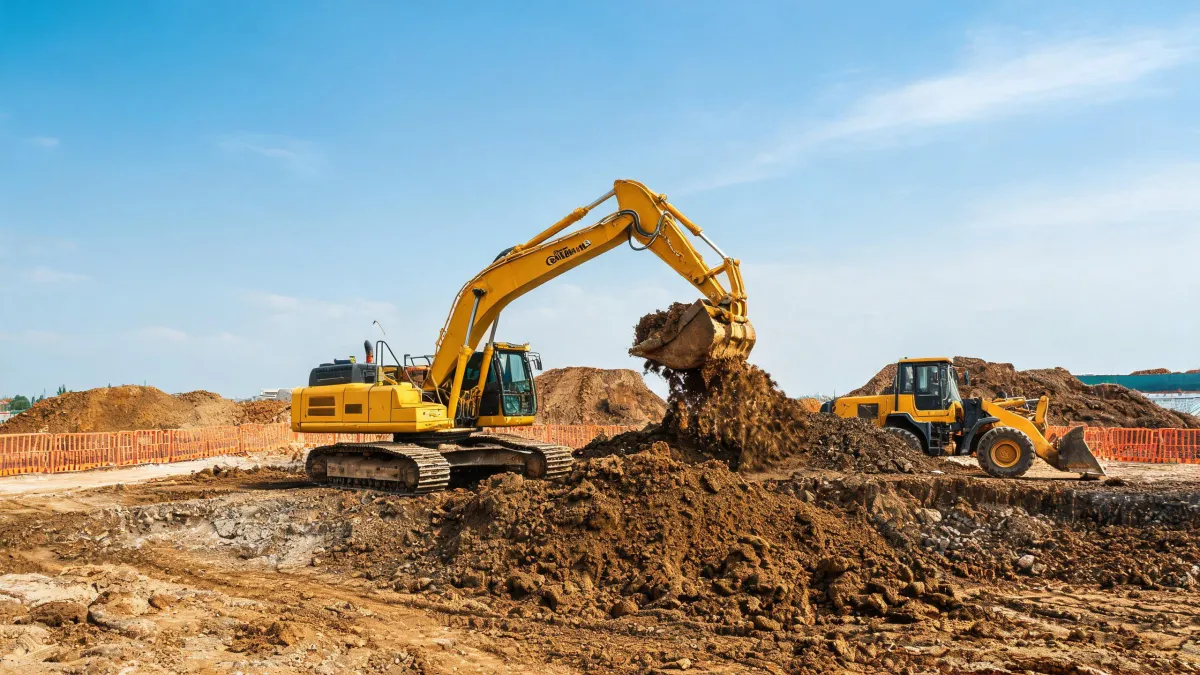
This keyword keeps surfacing alongside the compactor searches, so let's clear it up. An excavator is a tracked or wheeled machine built around a boom, stick, and bucket, used for digging, trenching, and material handling. It's a different category from a plate compactor — excavators move soil, compactors densify it. If you searched "what is an excavator" expecting compactor advice, that's the mix-up.
The reason the two get conflated in search results is that both are "yellow iron" and both show up in the same contractor buying guides. They're not interchangeable, and neither one substitutes for the other on a site prep job.
An industry-evolution note, because this part genuinely changed
What was best practice in 2020 doesn't fully apply in 2025. Five years ago, most small contractors I knew treated plate compactors as disposable-ish tools — run them, replace wear parts from whatever fit, replace the machine when it dies. That worked because parts were cheap and labor was the bottleneck.
That's shifted. Parts lead times got less predictable, and the cost of a week of downtime now dwarfs the cost of a slightly more expensive machine with better parts availability. The fundamentals haven't changed — compaction is still about lift thickness, moisture, and passes — but the buying decision has moved toward "who can keep this running" instead of "who sells it cheapest."
I have mixed feelings about this. Part of me misses the era of cheap, simple, fix-it-with-a-hammer machines. Another part of me remembers the two-week waits and doesn't miss them at all.
When this advice doesn't apply
If you're renting for a one-week job, ignore most of this. Rental fleets absorb the parts and maintenance risk, and your only real decision is whether the machine shows up working. The parts-diagram discipline matters when you own the machine and the downtime.
Also: if you're buying used from a private seller with no serial-number documentation, walk away unless the price reflects that risk. I've done it once and got lucky. I wouldn't do it again.
And if you landed here searching for Skullcandy Crusher ANC 2 or a lint roller — wrong article, sorry. Those keywords got mixed into this batch of search data. Nothing in this piece will help you with headphones or pet hair.