Why Your 500t Liebherr Crane Shows Up Late—And What That Actually Costs You
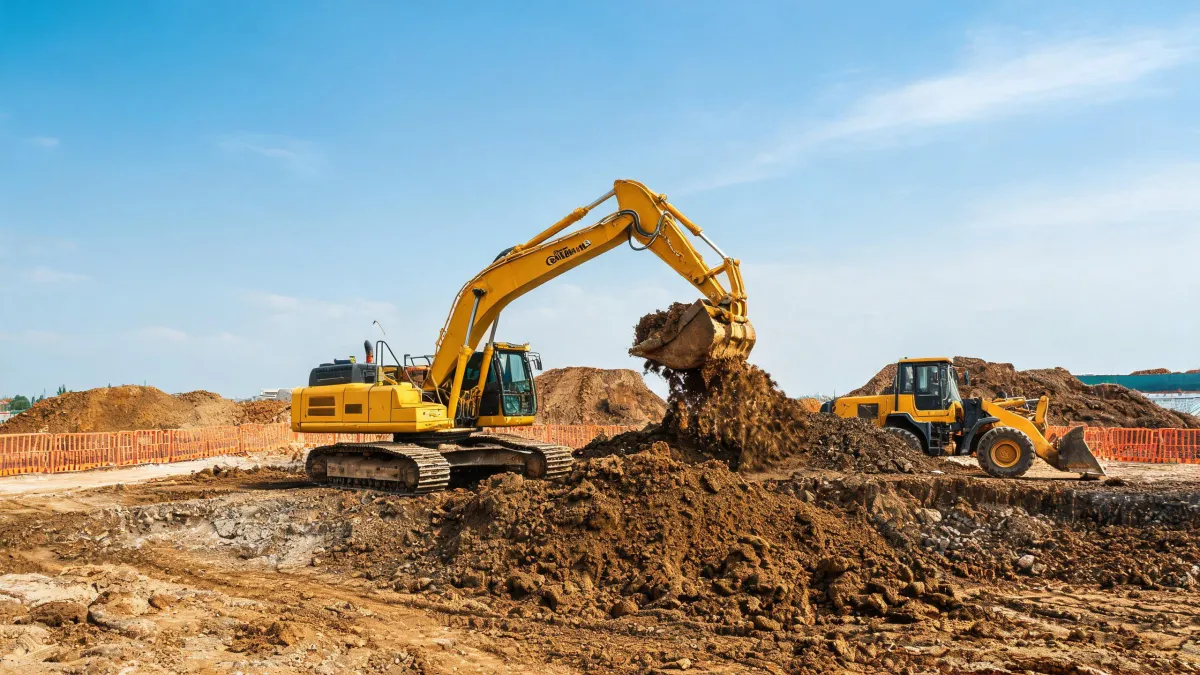
The delay started before anyone noticed
Most buyers think a delivery delay begins the day the crane leaves the factory. It doesn't. It begins the moment the purchase order gets signed with a delivery window that says "Q3, approximately."
I've spent the last four years reviewing heavy equipment deliveries for a construction equipment company. Last year alone I rejected roughly 12% of first deliveries—not because the specs were wrong, but because the delivery date had already slipped by the time anyone flagged it. It turns out the equipment itself wasn't the problem. The problem was how we bought it.
If you've ever ordered a piece of heavy equipment and watched the delivery date move twice before a single bolt got tightened, you already know what I'm talking about.
The surface problem: late machines and broken schedules
Here's what it looks like from the outside. You're project-managing a lift that requires a 500t Liebherr crane. The delivery window gets pushed. You've got a crew onsite, a lift plan approved, and a tight enough budget that a two-week delay throws the whole sequence off.
Your team spent three weeks learning how to operate a forklift for the on-site material staging. Your truck bed is stacked with rigging gear. The DeWalt drill kits are laid out and ready for install tasks. Everything is prepped—except the crane.
On paper, the specs looked great. The crane's capacity was more than sufficient. It was built by a brand that's proven on 3,000-tonne-capable models like the LR13000. And yet the equipment isn't on site when the lift window opens.
Most people look at that and say: "Factory backlog." Or "supply chain." Or my personal favorite, "shipping delays."
Those are surface answers. The real cause runs deeper.
The deeper issue: buyers don't actually buy delivery certainty
People think delays happen because manufacturers overcommit. In reality, delays happen because buyers under-specify what delivery actually means. We built the problem on our end of the transaction.
When you negotiate a heavy equipment purchase, the conversation centers on specs and price. Lifting capacity, boom length, transport configuration. All of that matters. But if you asked most procurement teams to show you the clause in their contract that says "guaranteed delivery date," you'd get a blank look and a sentence that starts with "Well, they said..."
That's the problem. We treat delivery as a logistics detail. It's not. It's a quality attribute.
I learned that the hard way in early 2023. We ordered a large-capacity mobile crane for a project with a hard deadline. The manufacturer's sales rep was confident: "Should arrive third week." I didn't push for written confirmation because we'd worked together for years. Well, that was the one time the verbal reassurance meant nothing when the schedule shifted. The machine arrived six weeks late. The deadline didn't move with it.
Here's the assumption I got wrong: I assumed production capacity dictated delivery reliability. Didn't verify. Turned out capacity doesn't predict delivery any better than horsepower predicts whether a machine starts in the morning.
Manufacturers deliver on time when the terms force them to. When the terms are soft, delivery quietly becomes the variable everyone adjusts.
What the delay actually costs you
This is where the math gets ugly.
Say you're leasing a 500t Liebherr crane for a fixed lift window. Let's say the on-site crew includes 14 people: operators, riggers, project engineers. Let's say idle labor runs about $11,000 per day when you total it up. Now add the rental cost of the crane itself—maybe $30,000-plus per month prorated over the delay. Add the cascading costs when the next lift window doesn't match the revised schedule.
In one of our 2023 projects, a six-week delay on a single machine cost us roughly $47,000 in idle costs, rescheduling, and penalty fees on the hook. That's not a number I tossed around in conversation. That's a number that showed up on a ledger and stayed there.
But the direct costs weren't the worst part. The worst part was the recovery. Changing the sequence meant rebidding subcontracted lifts. That took another three weeks. And on top of that, our customer-facing team had to keep explaining why the site sat still while the crane wasn't there.
I've seen the same story play out with smaller machines, too. A delayed excavator means delayed site prep, which means delayed foundation work, which means the whole build schedule slips by a factor that's larger than the original delay. It compounds.
And separately: not every delay is caused by the manufacturer. Sometimes it's on us. One 2022 order went sideways because I assumed "spec-confirmed" meant "schedule-confirmed." Didn't verify. Turned out those are two entirely different processes, handled by two entirely different teams, and neither one was talking to the other. I paid for that assumption with a two-week slip and a very uncomfortable conversation with the project lead.
The solution is simpler than the problem: pay for certainty
After enough of these delays, we changed how we buy. The change wasn't dramatic. It was just one hard rule: we budget for guaranteed delivery.
Here's what that looks like in practice. We negotiate the delivery date into the contract with a stated penalty for slippage. "Target date" becomes "guaranteed date" with teeth. When the manufacturer can't commit to a guaranteed date, we either adjust the schedule upfront—or we pay a premium for a slot the manufacturer can prioritize.
How much is the premium? In our experience, it runs about 1-3% of the equipment cost when you're negotiating serious scheduling priority. Spread that over the life of the project, and it's a rounding error. Compare that to 3-5x that number in idle costs and rescheduling when the pie-in-the-sky delivery date slips.
For context, a USPS First-Class Mail letter costs $0.73 as of January 2025, and most companies wouldn't hesitate to pay an extra dollar for certified delivery when a legal document matters. Equipment delivery operates on the same principle. The premium is small relative to the consequence.
The bottom line: certainty about when your equipment arrives is worth paying for. The uncertainty of "probably on time" isn't worth the discount it supposedly saves you—it's the most expensive thing in the procurement file.
Budget for guaranteed delivery. Write the date into the contract. Verify it before you sign. That's the whole lesson.