The 36-Hour Backhoe Bucket Wholesale Order That Changed How I Buy LiuGong Excavator Parts
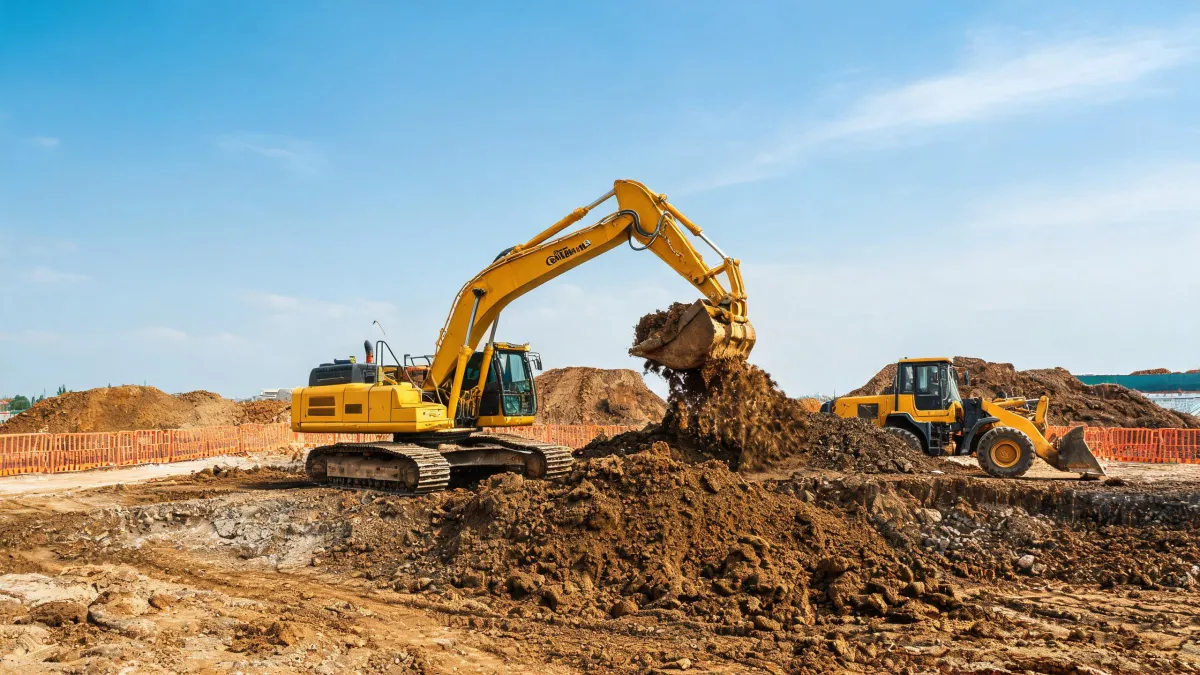
It was 2:15 p.m. on a Tuesday in March 2024 when I got the voicemail that undid my afternoon. A contractor outside Reno was on the line. His LiuGong excavator had a cracked bucket, his crew was scheduled to start a job in 36 hours, and the contract had a $12,000-per-day penalty for a late start. He asked for a backhoe bucket wholesale quote, because he didn't just want a replacement—he wanted to test us as a supplier for his whole rental fleet.
The timing couldn't have been worse. We had just started expanding our aftermarket parts supply program, and this contractor was exactly the kind of account we wanted to grow. Not just one bucket, but a steady flow of attachments and maintenance parts. I knew that if we fumbled this order, we'd never get a second chance to quote his fleet.
I've handled rush parts orders for a regional equipment dealership for almost six years. By that point, I'd processed more than 200 of them. Most fit the same pattern: a broken machine, a tight deadline, and a buyer who wants the cheapest thing that can get there in time. This one fit all of it. Except this time, I was the one about to make the rookie mistake.
The Two Quotes
I went back and forth for a solid hour. Option one was a private-label aftermarket bucket from a wholesale supplier in Phoenix. It was in stock, priced at $2,700, and could be delivered to Reno the next morning. Option two was a genuine LiuGong OEM bucket from a dealer in Sacramento. It cost $4,100, but the standard lead time was five to seven days.
At the time, the Phoenix supplier had been on our approved vendor list for eight months. No major complaints. But 'approved' didn't mean 'tested under pressure.' On paper, the Phoenix bucket was the obvious answer. The listing said 'compatible with most compact excavators,' which, in my head, meant it would fit a LiuGong excavator without fuss. I sent the purchase order at 4:20 p.m.
Then my mechanic walked past and asked, 'Did you check the pin spacing?' I hadn't. I didn't even know what pin spacing was, not in a practical way. I'd seen it in spec sheets, but I'd never needed to care. That changed in the next ten minutes.
The Twist
I called Phoenix back. The bucket's pin spacing was 340 millimeters. My mechanic measured the mounting bracket on the machine—or rather, the part where the bucket mounts to the arm—and got 305. We double-checked. Still 305.
He looked at me with the expression mechanics have perfected over decades. 'You ordered a 340-millimeter bucket for a 305-millimeter arm. That's not a bucket. That's a project.'
'Compatible' turned out to mean 'you can make it fit if you buy an adapter, machine new holes, and pray.' The supplier admitted the adapter alone was $700 and would take two days to get to Reno. My 36-hour window had just become 24.
I've made this kind of assumption before. In my first year, I approved a shipment of what I thought were identical pins. They were 5 millimeters too long. That $300 mistake caused about $1,800 in labor and a lost weekend. But this was worse, because a client's revenue depended on the machine being ready.
OEM vs Private Label, Not Just a Price Gap
Here's where I frustrated my boss for a few hours. He wanted me to make the Phoenix bucket work because the difference was $1,400. I wanted the LiuGong OEM bucket because I didn't trust a $700 adapter plate to hold up under the kind of loading a construction bucket sees. A bucket isn't a fender. If it fails on day two, the $1,400 savings disappears in one penalty day.
Part of the problem was that I was thinking like a buyer, not a mechanic. A buyer sees price and delivery. A mechanic sees fit and stress. I needed to think like both, but the clock made me lazy.
I called the Sacramento dealer and explained the situation. After three calls and one pointed conversation with a district manager, they agreed to release the bucket that night if we paid upfront. I sent the purchase order at 6:10 p.m., and the courier pickup was scheduled for 8:00 p.m.
The truck pulled into the contractor's lot at 8:15 p.m. the next day—actually, 8:22 by the photo time stamp. He had the bucket installed before midnight. He sent me a video at 1:00 a.m. of the excavator running a test dig. The bucket was tight, the pins lined up, and I finally exhaled.
The Real Math
Let me do the math out loud, because this is the part that stuck with me. The private-label bucket was $2,700. Add a $700 adapter and whatever custom pins might cost, and you're at $3,400 plus installation labor. The LiuGong OEM bucket was $4,100. Oh, and that price didn't include freight; another $850 put us at $4,950. Difference: about $1,550.
But the private-label path carried a risk: if the adapter didn't work, the job would miss its start, and the penalty was $12,000 per day. $1,550 against $12,000 is not a contest.
The client later told me he had budgeted $3,000 for the replacement. He ended up paying about $600 more than that, but he didn't lose a single day. His words when the invoice landed were simple: 'That's the cost of doing it right.' He renewed his parts supply agreement with us the next quarter.
For reference, backhoe bucket wholesale prices in our region ranged from $1,800 for no-name steel buckets to $5,200 for OEM units in early 2025, based on quotes we collected from four suppliers. That's just a snapshot, so verify current pricing before you plan around it.
I'm not saying private-label parts are always bad. For a mirror, a seat cover, a door hinge—sure. But for anything load-bearing, I'd rather buy OEM. I'd argue that's the more cost-effective path in the long run. That's not because the brand is special. It's because the geometry was designed for that machine. As my mechanic puts it, 'The bucket isn't the part; the linkage is.'
That's the excavator OEM vs private label argument in a nutshell: the sticker price is the beginning, not the end. Hidden costs—fitment, downtime, rework, broken relationships—are where the real money goes. I've seen it happen with LiuGong forklift parts too. A mast cylinder that costs $120 less with a bracket just two millimeters off ends up costing $400 in labor and a week of headaches.
What I'd Do Differently
If I could go back, I would have called the mechanic before calling the supplier. That sounds obvious now, but in the middle of a rush, my instinct was to save time by going straight to the cheapest in-stock option. That instinct is wrong more often than it's right.
I also should have asked the Phoenix supplier for a fitment table before sending the PO. At minimum, I'd have asked for the bucket's pin spacing and bushing size in writing. Instead, I assumed 'compatible' meant 'identical.' My mistake. Not the kind that costs you a client, but close.
One more change we made: we started asking every wholesale supplier for a fitment guarantee in writing. If they won't put a spec sheet behind the part number, we don't put them on the list. That rule came directly from a 305-millimeter mistake.
For anyone buying backhoe bucket wholesale, here's one piece of advice. Build a fitment checklist before you need it. Know the pin spacing, pin diameter, and bucket-to-arm width for every machine model you support. Write it down. Put it in your quote template. Future-you will be grateful.
A cheaper part only becomes a bargain if it does the same job without creating a second job.