The Cheapest Liugong Excavator Quote Isn't the Best Deal — Here's What B2B Buyers Keep Missing
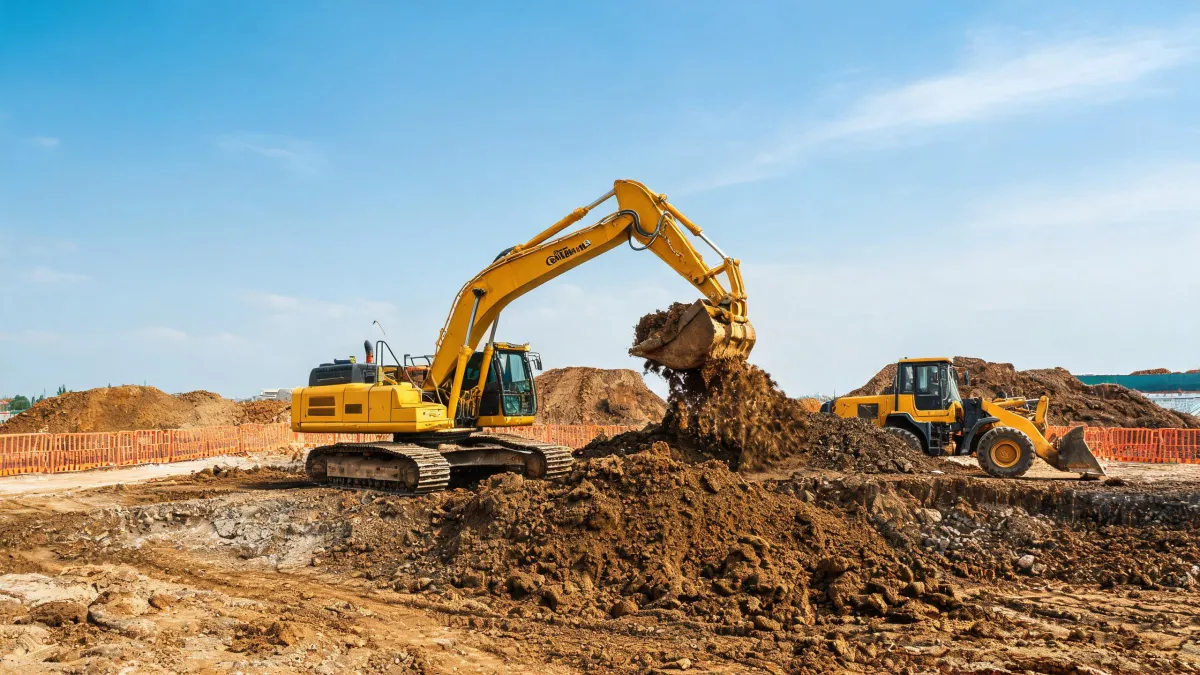
Here's a claim I've earned the right to make after eleven years and roughly 230 equipment deliveries: the cheapest number on a Liugong excavator quote is almost never the cheapest number in your actual cost per hour on site. I've watched contractors save $8,000 on a machine and lose $22,000 on downtime, compliance rework, and rushed parts. I've also watched buyers pay a premium and come out ahead. That gap, between quoted price and delivered cost, is where most B2B procurement mistakes live.
Let me be specific, because generalities don't help anyone holding a purchase order.
What a Liugong Excavator Price List Actually Tells You (And What It Doesn't)
Most buyers search for a liugong excavator price list expecting a clean spreadsheet. What they get, if they're lucky enough to get one at all, is a starting figure that excludes the line items that determine whether the machine works for their project.
On a mid-size unit, here's what typically sits outside the advertised price:
- Bucket and attachment configuration — the base bucket is rarely the one your job needs
- Hydraulic quick-coupler compatibility (and whether your existing attachments will fit)
- Transport and customs brokerage, which varies wildly by destination market
- Operator training hours (yes, this shows up in the real cost)
- First service interval parts — filters, fluids — that differ by regional spec
I only believed this after ignoring it once. In March 2023, we quoted a client on what looked like a 12% savings versus an alternative supplier. We didn't itemize the hydraulic coupler spec. It didn't match our existing attachment inventory. That mistake cost $14,000 in replacement couplers and about three weeks of scheduling chaos. After that, our internal policy became: no PO without a full landed-cost worksheet, signed off by whoever's running the machine.
What I mean is: the price list is a starting point, not a budget line. Treat it as a question, not an answer.
The Compact Excavator Private Label Question Nobody Wants to Ask
Compact excavator private label sourcing has exploded over the last four years. And from the outside, it looks straightforward: pick a manufacturer, apply your branding, sell into your channel. The reality is that private label relationships live or die on three unglamorous details.
First, who owns the warranty claim process. If your private label partner in China disappears or changes product lines, your end customer still calls you when a hydraulic pump fails at 400 hours. I've watched a distributor eat $37,000 in warranty work because their contract didn't spell out parts availability timelines for discontinued models.
Second, whether your OEM partner actually manufactures the whole machine. A lot of "a mini excavator OEM" arrangements wrap a third-party engine, third-party hydraulics, and a locally fabricated chassis. That's fine — but you need the parts traceability to back it up, or every service call becomes a scavenger hunt.
Third, and this one gets skipped constantly: who is responsible for regional compliance. Which brings us to the elephant in the room.
Excavator Compliance Requirements Are Not a Paperwork Problem
Buyers focus on engine tier and completely miss the compliance stack around the machine. The question everyone asks is "What emission tier is this engine?" The question they should ask is "Which markets can I legally put this machine to work in, as configured?"
Depending on destination, you're juggling:
- EU: Machinery Directive 2006/42/EC, plus Stage V emission requirements for non-road mobile machinery
- US: EPA Tier 4 Final for engines above 19 kW, plus OSHA operator-protection standards on site
- China domestic: GB 20891-2014 China IV (with regional rollout timing that has shifted more than once since 2022)
- ISO baseline: ISO 6015 for hydraulic excavator force measurement, often cited in tender specs
Here's the part that costs real money. If your machine ships with a Stage IIIA engine but your customer tenders on a Stage V project, the machine is functionally scrap until it's re-engined or re-routed. I've seen a distributor lose a $180,000 order over a document package they assumed would match the spec sheet. The spec sheet isn't the compliance certificate. They're different documents.
Calculated the worst case on one of these deals once: complete re-export or re-power at roughly 30% of machine value. Best case: saves a few thousand dollars on the initial order. The expected value said walk away. We walked away. Two quarters later that same buyer came back for a compliant unit.
"But Isn't Paying More Just Paying More?"
Fair pushback. I hear it every time someone looks at a fully itemized quote next to a stripped-down one and decides the itemized vendor is padding.
The counter isn't "expensive is better." The counter is: itemized is better than un-itemized. A supplier who puts coupler specs, warranty terms, parts lead times, and compliance documents in writing on the proposal — even when that makes the total look higher — is giving you a number you can actually plan against. A supplier who gives you a headline price and "we'll sort the rest out later" isn't cheaper. They're just deferring the cost to a moment when you have less leverage.
After 5 years of running these evaluations, I've come to believe that the pricing conversation and the compliance conversation can't be separated. The moment a vendor tries to separate them, that's the moment I slow down.
The Policy That Saved Us
Our company lost a $95,000 distribution agreement in 2022 because we tried to save about $6,000 on a compliance documentation package. The client's procurement team flagged the gap during due diligence. They didn't negotiate. They just moved on.
That's when we implemented what we now call the "full stack first" rule. Every machine order gets four things in writing before the PO is signed: landed cost worksheet, compliance document set for the destination market, parts availability timeline, and named service contact. The list isn't clever. It's just enforced.
The liugong brand itself operates across a fairly wide global footprint, which means the same physical machine may ship under different compliance configurations depending on destination. That's not a flaw — it's a reality of international distribution. The flaw is assuming your local rep already knows which config your project needs. They might. Ask them to put it in writing.
So, back to the original claim. The cheapest quote on a Liugong excavator, or a compact excavator private label unit, or any mini excavator OEM package, isn't the best deal. The deal where every line item is on the page before you sign is. Every time.