Why I Pay a Premium for Delivery Certainty on Excavator and Attachment Orders
-
In a Rush, You're Buying a Date — Not a Machine
-
Argument 1: The Invoice Isn't the Cost — The Idle Machine Is
-
Argument 2: Certainty Leaves a Paper Trail — Confidence Doesn't
-
Argument 3: The Real Deadline Killer Isn't Speed — It's a Spec Mismatch
-
Where the Cheap Route Is Actually the Right Call
-
What I'm Not Qualified to Tell You
-
The Bottom Line
In a Rush, You're Buying a Date — Not a Machine
If a machine is down or a crew is standing around, the cheapest quote in your inbox is usually the most expensive thing you'll buy that quarter. I'd rather pay 6–10% more for a delivery date somebody will put in writing than save that money on a "should ship by Friday" promise. In my experience, the premium for certainty is smaller than the cost of the day it fails.
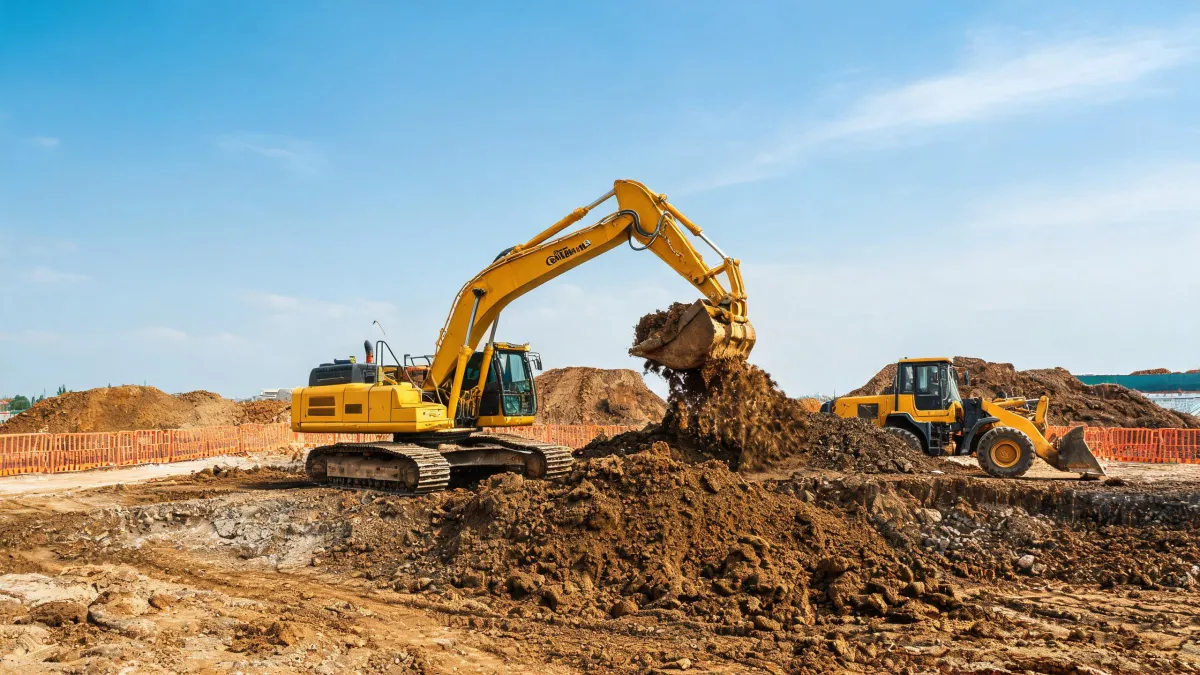
I coordinate expedited equipment and attachment orders for a construction equipment distributor — excavators, backhoe buckets, hydraulic pumps, undercarriage, breakers. Over the last nine years I've handled 400-plus rush orders, including same-week turnarounds for contractors, rental houses, and municipal fleets. Most of them started with a call that went roughly like this: "It blew a seal this morning. We need it Thursday."
That phone call is where the whole argument lives. At 72 hours out, you're not shopping for price anymore. You're shopping for a commitment.
Argument 1: The Invoice Isn't the Cost — The Idle Machine Is
Nobody budgets for downtime in the same column as the purchase price, which is exactly why it gets underestimated. A 20-ton excavator sitting in a ditch doesn't stop costing money. You're still paying the operator. You're often paying standby labor for the crew behind them. And on any job with a completion schedule, you're burning calendar days you may not have.
Rental replacement for a 20-ton machine typically runs $1,000–$2,500 per day depending on market and availability (based on quotes our customers have shared across US markets, early 2026; verify current regional rates). Add operator cost and the downstream trades waiting on you, and an $8,000 "saving" on the purchase can evaporate in four or five working days.
I had one in February 2026 that I still use when onboarding new hires. A grading contractor lost a hydraulic pump three days into a school-site package and needed a replacement 20-ton machine. Normal lead time on the configuration he wanted was about three weeks. We located an allocated unit two states over, paid roughly $3,800 in expedited freight and prep premium on top of standard delivery, and had it on his lowboy in 60 hours. His alternative was renting a comparable machine for two to three weeks — call it $25,000–$35,000 in rental alone, before the schedule hit.
He didn't love paying the premium. He loved not explaining a missed milestone to the general contractor.
Argument 2: Certainty Leaves a Paper Trail — Confidence Doesn't
This is where most buyers get burned, and it usually has nothing to do with price.
"Yeah, we can get you one" is not a delivery date. It's a feeling. When the clock is short, the only thing that should count is documentation you can point at. When we quote a rush order, I want the buyer to demand four things:
- A specific unit, identified. Serial number or stock number — not "a machine just like it."
- A physical location. On a dealer's yard, in a regional depot, or on a vessel? Those are three very different timelines.
- Freight booked, with a PRO number. A carrier assigned is a plan. "We'll figure out shipping" is not.
- A written list of what's included. Attachments, coupler, bucket, warranty registration, manuals, DOT or export paperwork if it's crossing a border.
I'm not pushing paperwork because I like paperwork. I'm pushing it because rush orders rarely fail because a vendor lied. They fail because everyone was working from a different assumption and nobody noticed until Thursday.
That's also why I lean on established channels when the clock is short. Working through a liugong equipment dealer who already has the unit on their yard — or who can see real factory allocation in the system — beats a broker who's cold-calling around the country. Same logic applies when you're adding a liugong excavator into a fleet on a tight window: the existing dealer relationship is often what decides whether you get the machine in 60 hours or in three weeks.
Argument 3: The Real Deadline Killer Isn't Speed — It's a Spec Mismatch
Everyone worries about the machine arriving late. In our order log, the more common disaster is the right machine showing up with the wrong attachment — or the right attachment that doesn't actually fit.
Buckets are the classic example. Pin-on versus quick coupler. Pin diameter. Stick width. Bucket width and capacity. Tooth type. If you buy a backhoe bucket from a supplier who can only tell you it "fits a 20-ton machine," you've got maybe a coin-flip chance of it pinning up on your unit. When it doesn't, you don't lose an hour. You lose another week, and now you're arguing about return freight with somebody who's already been paid.
Good suppliers ask for the machine model, serial range, coupler make and model, and pin dimensions before they quote. If a backhoe bucket supplier won't ask those questions, treat it as a signal — the price is low because the work isn't being done.
Same pattern on wear parts. When a buyer pulls up an excavator wholesale cost guide or goes down the PC excavator wholesale rabbit hole looking for a deal on the 20-ton class, the price spread looks enormous — until you compare what's actually in the box. OEM-spec versus will-fit matters, and the difference shows up at hour 1,500 in a quarry, not at the delivery dock.
Where the Cheap Route Is Actually the Right Call
I don't want this to read as "always pay the premium," because that's not true, and it's how you earn a reputation for upselling.
The cheap route is genuinely correct when:
- You have a real lead-time window. Six weeks out, you're a planner, not an emergency buyer. Shop the price hard. Compare freight terms, compare warranty administration, compare parts availability.
- The part isn't critical-path. A second spare bucket for a machine that has one is not worth a rush fee. A hydraulic pump for a machine that's your only unit absolutely is.
- The spec is fully standard. Common filters, common teeth, common hose assemblies with published specs. There's no engineering risk to absorb, so there's no premium to justify.
What I'd push back on is buying cheap inside an emergency and telling yourself it's the same thing. It isn't. You've just moved the risk from your invoice to your schedule, and schedules are where the real money sits.
What I'm Not Qualified to Tell You
I'm not a hydraulic engineer or a service technician, so I can't tell you whether a particular pump spec, relief setting, or undercarriage configuration is right for your machine. That's a conversation for your service manager and the OEM's technical documentation, and I'd rather say that plainly than guess.
What I can tell you from an expediting perspective is how to judge whether a delivery promise is real — because that's the part of the problem I actually watch fall apart every week.
The Bottom Line
Yes, I've been accused of paying too much for freight. I've also never had to call a customer and tell them the machine they were promised for Thursday is now coming Tuesday. Those two things are related.
We've run about 420 rush orders out of this branch over the years. Maybe 380 — I'd have to pull the system, and the definition of "rush" has drifted a bit since 2019. The consistent pattern across all of them: the orders that went sideways were the ones where somebody optimized for price inside a deadline. The orders that landed clean were the ones where somebody paid a little more for a date they could hold.
Even on the good ones, I second-guess. After we paid the expedite premium in February, I spent most of that weekend wondering whether the freight quote would come back higher than the estimate, or whether the unit would show up with a paint scuff that turned into a two-day argument. I didn't fully relax until the lowboy pulled in and the operator fired it up in front of me.
That's the trade, as far as I'm concerned. You pay a premium for certainty, and then you hold your breath anyway — because you know what missing the date would have actually cost.
Pricing and lead-time figures in this article are for general reference only, based on quotes and order records current as of early 2026. Actual prices and transit times vary by region, configuration, season, and carrier availability. Verify current rates with your dealer or supplier before committing to a schedule.