What Buying a LiuGong Excavator Taught Me About Dealers and Bucket Specs
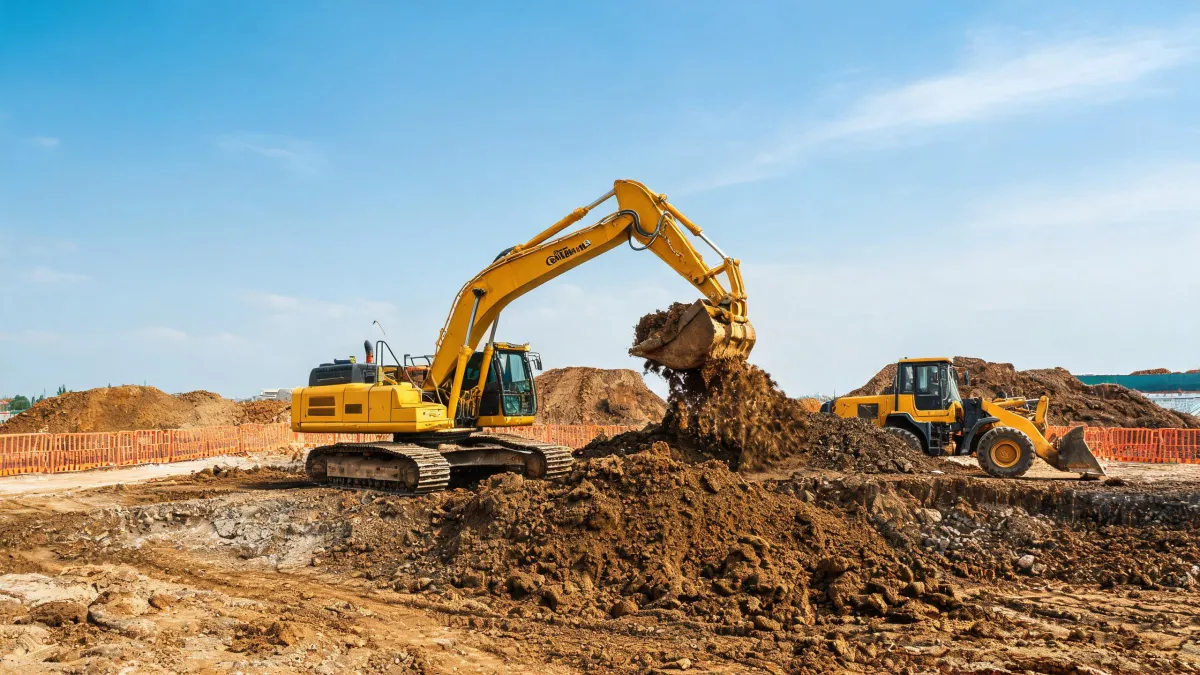
The day the equipment request landed on my desk
It was a Tuesday in October 2023. The operations manager dropped a one-page request on my desk that said, in effect, "equipment purchase — excavator."
I do administrative procurement for a general contractor of about 120 people. I'm not an operator, not a mechanic. I'm the person who connects the need to the quotes to the vendor qualifications to the approvals. I report to both the VP of Operations and finance. Last year I managed roughly $900K across seven or eight primary vendors in a handful of categories.
I didn't know it at the time, but one excavator would drag me through more details than any service contract I'd handled before.
Why LiuGong ended up on our shortlist
Some context first. We'd been renting for two years — three excavators, two wheel loaders, rolling month-to-month. By fall 2023 the lease math had gotten bad enough that ops ran the numbers and said buying one machine to start made sense.
The model selection wasn't mine to make. Operations set the criteria — bucket capacity, digging depth, service radius, parts availability. Imported brands were in the mix. LiuGong was too, for a pretty plain reason: the product line covers just about everything we'd eventually need (excavators, wheel loaders, bulldozers, graders, forklifts), and we had more than one LiuGong equipment dealer in our region. That meant we could actually compare quotes and support terms instead of taking a single number.
We also glanced at the backhoe loader market while we were at it, mostly out of curiosity. That side of the industry is more fragmented than people think — there are dedicated backhoe manufacturers, and there are OEM backhoe loader channels that bundle the machine into a wider product line. For a company just starting to build a fleet, being able to talk through the whole lineup with one dealer mattered more than squeezing the last few percent off a single unit.
My job started here: email the dealers, collect quotes, normalize them, forward the package to finance.
Three dealers, two very different attitudes
I sent three inquiry emails with the same basic operating info and model request. Response times were roughly the same. The attitudes were not.
Dealer One replied two days later with a short email, one model number, one price, and a "when can you decide?" I asked for spec details. The answer was: "Let's talk once it's confirmed."
Dealer Two was also brief, but included a line I still remember — something like, "For a quantity like this, we'd have to schedule it as a project." Reading between the lines: one machine isn't really worth our calendar space.
Dealer Three was the regional manager himself. He came back with a set of questions instead of a number — site size, what we're digging, whether there's rock, what the operator's used to, and whether we planned to add a breaker later. That's not sales. That's a needs assessment.
When I lined up the three quotes, the first two were slightly cheaper per unit. But Dealer Three had attached a full page of configuration detail — including the bucket specification. At the time I didn't realize that one page was the whole reason we ended up going with them.
The bucket spec surprise that nearly cost us $3,000
Operations had given me a simple line: roughly 1.0 cubic meter capacity, general purpose. I assumed that was the end of it. It was not. "1.0 m³" contains at least three variables I didn't know about.
First: heaped versus struck capacity. The industry usually leans on SAE J1179, which defines the heaped rating — but not every quote labels which one it's using. Two of the three quotes we received used different bases. On paper they looked identical. In practice they were almost 15% apart.
Second: bucket width and tooth profile. Same nominal capacity, but a wide shallow bucket is built for grading and leveling, while a narrower one handles hard soil and trenching better. Most of our work is municipal pipe and road shoulders, which points toward a slightly narrower setup than the default general-purpose bucket.
Third: pin-on versus quick-coupler interfaces. I'm going to be honest here — hydraulic flow rates and pump displacement are outside my lane, and I won't pretend otherwise. What I can tell you from the procurement side is this: if the coupler interface isn't standardized across your eventual attachments (breaker, shear, ripper), you're looking at a four-figure cost just to change the connection hardware later. That's not a spec question. That's a budgeting question.
Once we understood that, we sent all three dealers a written spec sheet and asked for line-by-line replies. The first two replied quickly and answered none of it. Dealer Three went through every line — and flagged one of our own entries, a tooth profile that didn't match our described working conditions, with an alternative recommendation.
Operations later ran the numbers on the cheap quote. If we'd ordered it and then tried to add a breaker, the interface mismatch alone would have cost us at least $3,000 before any downtime. That quote wasn't cheaper. It just looked cheaper.
What we ended up buying — and what I kept from it
We placed the order with Dealer Three in January 2024. I won't go into the exact model and configuration because that's not the point. The point is that for the next three months, their parts response and on-site support didn't drop off. By fall of 2024 we added a second machine. This time there was no three-way bidding round.
My notes from the post-purchase review became the template I still use:
- "Small order" is a filter, not a judgment. A dealer who'll spend an hour on a needs assessment for one machine is a dealer who'll probably answer the phone when something breaks. We screened two out that way and it held up.
- A quote is not a price list. Capacity basis, interface type, tooth profile — write each one down and make the dealer respond to it line by line, or you're comparing three differently-formatted opinions.
- Total cost isn't the sticker. Dealer responsiveness, parts radius, attachment compatibility — none of that shows up on the quote, and all of it shows up in the next two or three years. That's true whether you're buying an excavator, a wheel loader, or anything else with a serial number.
I've since put together what I half-jokingly call an excavator bucket specification guide for our team — really just a one-page checklist we attach to every RFQ. If it had existed before October 2023, I'd have saved two weeks.
Two honest caveats
This is not a universal buying process. It's what worked for a general contractor of about 120 people, buying single-digit units per year, with stable sites and an operations team willing to do the needs analysis with us. The whole approach depends on those conditions. If you're a rental company buying twenty machines a year, or you're sourcing cross-border, the variables change and my notes may not transfer.
And I'll admit the second one plainly: before that RFQ round, my understanding of bucket specs was roughly "bigger bucket, more dirt." Looking back, I should've written the capacity basis, interface, and tooth profile requirements into the very first inquiry email — not discovered them after the quotes came back. Hindsight is clean. The cost was two weeks.
So if you're sitting in a similar chair and someone hands you a request that looks like "just buy one machine" — pin the specs first, then compare. The dealers will show you who they are.