What I Learned Buying a Compact Excavator from a China Distributor (And Why the 9018F Price Isn't the Whole Story)
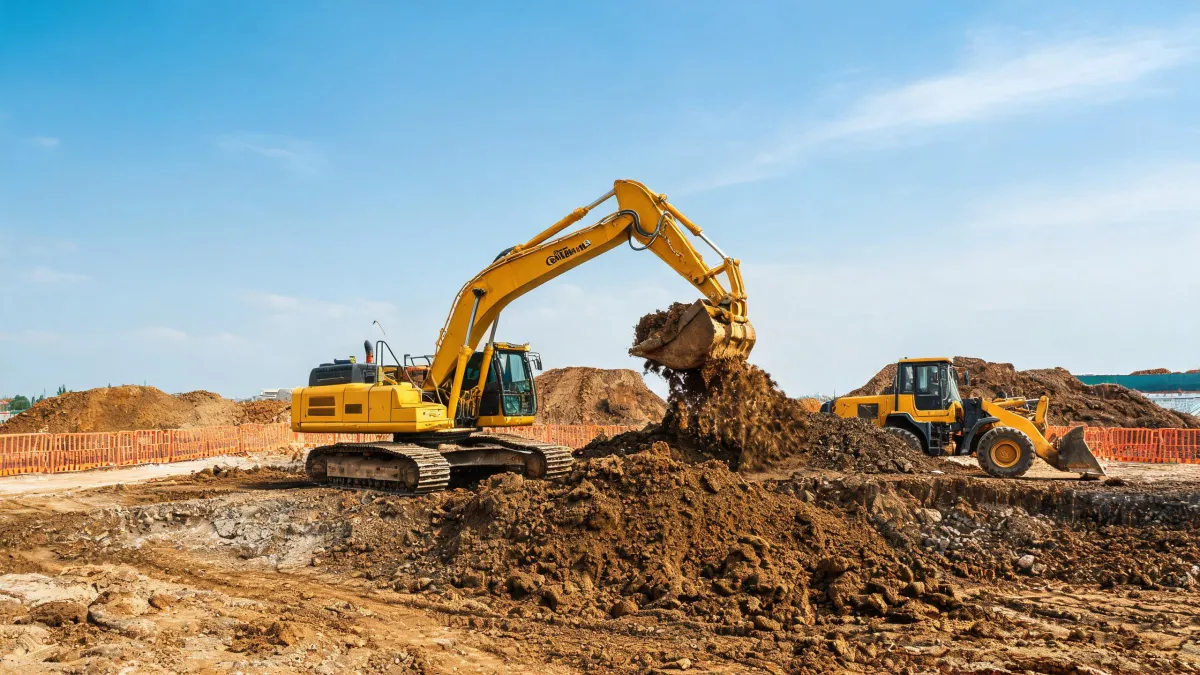
So back in early 2025, our operations director walked into my office and said, "We need a compact excavator. Can you look into it?" I'm the office administrator for a 55-person utility contracting company. I manage everything from safety equipment to coffee supplies—roughly $340K in annual spend across 11 vendors. Heavy equipment was a new one for me. I'd never sourced anything with a hydraulic system before.
When I took over purchasing in 2021, the biggest thing I'd bought was a $12,000 order of fall protection harnesses. So yeah, a compact excavator felt like a different universe.
But here's the thing—I'm pretty good at vendor research. I figured if I could compare paper suppliers, I could compare equipment sellers. I was kind of right. And kind of wrong.
The Search: Everything Points to LiuGong
I started where anyone starts—Google. Within an hour, I noticed something: whenever I searched for "compact excavator wholesale" or "excavator distributor China," LiuGong kept showing up. I'd heard the name before but honestly didn't know much about them. Turns out they're one of the bigger Chinese manufacturers, with a full line—excavators, wheel loaders, bulldozers, graders, rollers, forklifts, backhoes. We weren't in the market for all that, but it told me they weren't some fly-by-night operation.
Our need was specific: a compact excavator under 2 tons for utility trenching and small digs. The 9018F came up repeatedly in forums and distributor listings. So I dove into the "LiuGong excavator 9018F price" rabbit hole.
That's where things got messy.
The Price Range That Made No Sense
I collected quotes from seven different China excavator distributors over about three weeks. The 9018F prices ranged from $18,500 to $31,000 for what appeared to be the same machine.
I remember staring at that spreadsheet thinking: Either some of these are scams, or I'm missing something huge.
I called two of the higher-priced distributors first. One guy—let's call him the honest one—laughed when I asked why the range was so wide. He said, "You're comparing apples to invoices. Some quotes are FOB, some are CIF, some include the breaker package, some don't. And some of those cheap ones? They're brokers, not distributors. You'll wait six months and get a machine with no warranty support."
That was my first real lesson: the LiuGong 9018F price isn't a number. It's a category of numbers depending on what's actually included.
What "Wholesale Cost" Actually Includes
I ended up building a comparison sheet that broke down every quote into five buckets:
- Base machine cost (FOB port vs. delivered)
- Shipping and import duties (this alone varied by $4,200 between quotes)
- Attachment package (breaker, thumb, extra bucket—some bundled, some $2K+ extra)
- Warranty terms (12 months vs. 24 months, parts-only vs. full coverage)
- Parts availability commitment (do they stock consumables in-country or not?)
Once I normalized everything, the actual machine price range narrowed to about $19,800–$23,500. Still a spread, but way more logical. The cheapest "wholesale" quote I got early on? Turned out to be a broker who wanted 100% upfront and couldn't name a single parts depot in North America. I passed.
The Vendor Mistake That Almost Cost Us
Here's where I need to be honest about my own screw-up.
We narrowed it down to two distributors. One was slightly cheaper—about $1,100 less on the final quote. The other had a better warranty package and confirmed they had a parts warehouse two states away. I pushed for the cheaper one. My reasoning: $1,100 is real money, and the warranty difference was only six months.
My ops director asked me one question: "What happens when a hydraulic hose blows in July and we're mid-project?"
I didn't have a good answer. I'd been so focused on the purchase price, I hadn't thought through the ownership cost.
We went with the slightly more expensive distributor. And six months later, when a seal kit needed replacing, the part arrived in four days from that nearby warehouse. The cheaper vendor? I checked—they would've had to ship from overseas. Two to three weeks, minimum.
So glad I didn't win that argument. Almost did—I had the email drafted and everything.
Where LiuGong Actually Fit—And Where It Wouldn't
I want to be straight about this because I read a lot of content that just says "buy this, it's great" without context.
The LiuGong 9018F worked for us because:
- We needed a reliable compact machine for light-to-medium utility work
- We had a distributor with domestic parts support
- We weren't doing anything extreme—no rock breaking in quarries, no 12-hour shifts
- We were comfortable with a brand that wasn't the household name in our region
But if your situation looks like this, I'd think twice:
- You need same-week parts availability in a remote area. Some China distributors just can't deliver that yet. Check where their closest depot is before you buy.
- You're doing heavy-duty or high-hour applications. A compact excavator isn't a mini dozer. If you're running 10-hour days in abrasive conditions, the 9018F may not be the right tool—and honestly, a compact machine from any brand might not be.
- Resale value is your top priority. Well-known brands hold value differently. That's just reality. If you flip equipment every two years, factor that in.
I'm not saying LiuGong is "worse"—I'm saying it's the right tool for a specific set of conditions. If you're in a different set, look elsewhere. That's not a knock. That's just how procurement works.
What I'd Do Differently
Looking back, I should have built the ownership cost model before getting emotionally attached to the lowest quote. At the time, $1,100 felt like a win. But I hadn't factored in downtime risk, shipping speed for parts, or the value of having someone answer the phone when something breaks.
If I could redo that decision, I'd weight the "what happens after the sale" column just as heavily as the purchase price column.
The other thing I'd change: I'd ask for references from other buyers in my region earlier. I spent three weeks comparing spec sheets when a 20-minute call with another contractor would've told me which distributors actually support their customers.
The Bottom Line
Buying a LiuGong excavator through a China distributor isn't complicated if you treat it like any other vendor relationship—just with higher stakes. The 9018F compact excavator ended up being a solid fit for our utility work. But the price was only maybe 60% of the actual decision. The other 40% was support, parts, and honesty from the seller about what they could and couldn't do.
If you're sourcing a compact excavator wholesale, my advice: get the full landed cost in writing, verify the distributor's parts network, and don't let a cheap quote make the decision for you. The machine that shows up on time and keeps running is worth more than the one that saved you a thousand bucks upfront.
And if your operations director asks you a question like "what happens in July?"—answer it before you sign anything.