Why Your Excavator Bucket Order Keeps Getting Delayed — And It's Rarely the Shipping
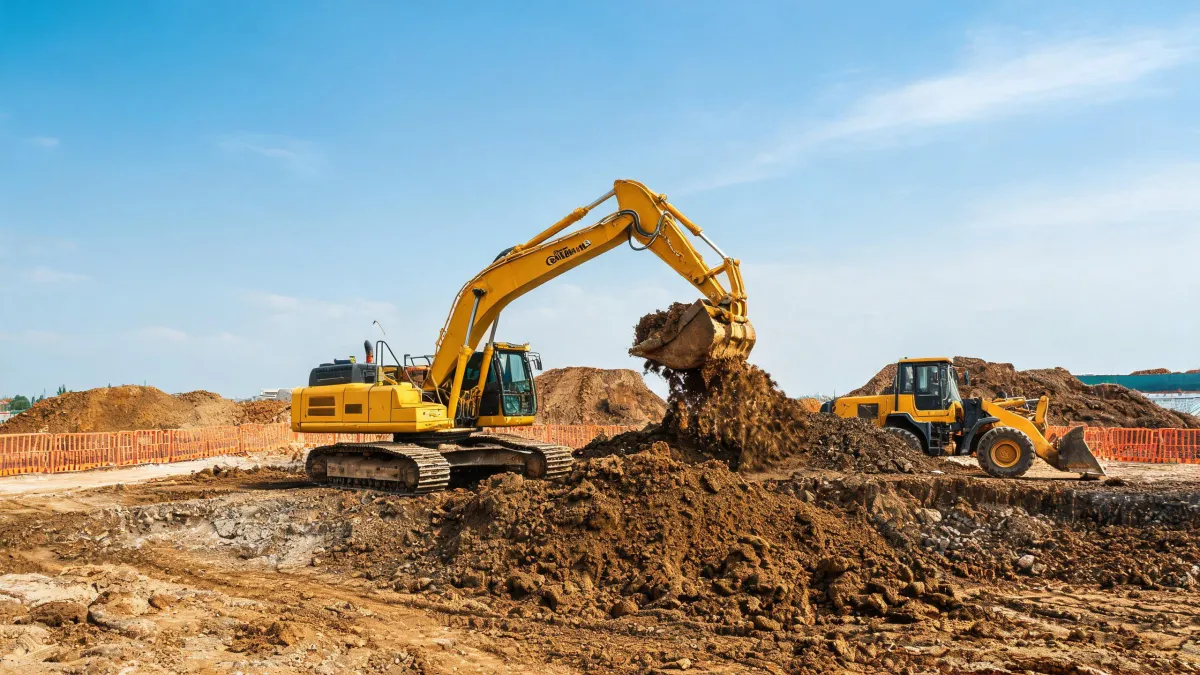
Last November, a client called me at 4 p.m. on a Thursday. They needed 30 hydraulic excavator buckets for an infrastructure project in Indonesia — six days out. Standard lead time for that spec? 30 to 45 days, anywhere. They assumed the problem was freight. Air versus sea, rush fees, customs clearance. I had to tell them: freight isn't the bottleneck. Compliance paperwork is — and compliance doesn't expedite.
That conversation happens more than you'd think. When buyers come to me for rush equipment orders — wheel excavator or backhoe attachments, mostly — they almost always blame logistics for the delay. The real bottleneck sits much earlier in the chain, long before anything touches a port.
The Problem You Think You Have
In my role coordinating rush equipment sourcing for construction and rental clients, the pattern is predictable. A contractor or a rental company needs a fleet of liugong excavators — or comparable units — deployed on a project in two to three weeks. They need buckets, usually in a specific capacity, matched to their existing machines. Sometimes they need backhoe private label arrangements, where their own branding goes on the equipment.
The quote comes back from a distributor. Price looks fine. Delivery is quoted at "3 to 4 weeks." Then it slips. Four weeks becomes eight. The project gets squeezed.
The instinct is to ask: who dropped the ball? After coordinating somewhere around 400 rush orders over the years — maybe 380, I'd have to pull the system to be exact — I can tell you it's rarely someone being lazy. It's structural. And most buyers don't realize it until they're already stuck.
The Deeper Cause Nobody Flags Early Enough
Here's the part that catches people off guard.
Compliance isn't optional, and it can't be retrofitted after the fact.
I learned this the hard way during a project a couple of years back. A client ordered excavator buckets for a rental fleet in the Middle East, sourced through a backhoe private label route. The pricing was competitive. The distributor said "standard specs, same as anything else." Sounded fine.
It wasn't. When the shipment landed, it got held at port because the documentation didn't match what regulators wanted — specifically, no clear conformity marking aligned with ISO 6015 (the standard for excavator hydraulic bucket capacity) and no traceable manufacturer declaration. We spent three weeks chasing paperwork. The client ate $8,000 in extra freight and almost lost the fleet contract entirely.
Here's what most buyers miss: bucket compliance requirements — especially for backhoe buckets and private label runs — determine whether a manufacturer is legally allowed to sell that unit into your market. If the seller hasn't done the conformity work upfront, you can't bolt it on later. No amount of expedited shipping fixes a missing declaration of conformity.
And that's before you account for the second layer: private label complicates the chain of responsibility.
When a backhoe private label order goes out, the paperwork has to reflect the actual manufacturer, not just the brand stamped on the side. I've watched distributors try to shortcut this. They'll ship with rebranded labels but keep the original manufacturer's documentation incomplete or misaligned. That mismatch — I said "same as OEM," they heard "we'll figure it out later" — shows up at customs, or worse, at the job site inspector's desk.
The third layer is subtler. A wheel excavator distributor operating in one region often sources from a different region's manufacturing hub. Each hop in the supply chain adds a layer of documentation that has to be reconciled. When you're in a rush, distributors skip steps they'd normally handle. Not out of malice — out of time pressure. That's precisely when the problem you didn't know existed surfaces.
What This Actually Costs You
The visible cost is delay. The invisible cost is worse.
On a recent project — I want to say Q1 2025, but don't quote me on the exact month — a client's order arrived with mismatched spec sheets for a batch of liugong excavators' attachment brackets. The brackets themselves were fine. The paperwork said they weren't. We lost nine working days sorting it out with the port authority. The client's penalty clause on that project was $12,000 per week of delay.
That's a $15,000 mistake caused entirely by paperwork. Not shipping. Not manufacturing. Paperwork.
I knew we should have verified the conformity documentation before the order shipped. But I thought "we've worked with this supplier for years — what are the odds this one gets flagged?" Well, the odds caught up. That's when we implemented our rule: no private label or rush order ships without a compliance pre-check, even with established vendors. (I should add that the pre-check costs about $400 and adds two days. It's saved us more than it's cost.)
There's also the compounding effect on customer trust. If a contractor can't get their buckets on time because of compliance, they're not frustrated with the compliance process — they're frustrated with you. And that relationship damage doesn't come with a reimbursement form.
So What Actually Works
The fix isn't complicated once you understand where the problem lives.
First: source through channels that own the conformity documentation, not just the equipment. A wheel excavator distributor who carries the manufacturer's own conformity certificates — and can show you the ISO 6015 alignment before you order — is worth the premium. This is where established OEM networks, like liugong's authorized dealer channels, tend to be more predictable than spot-market sourcing.
Second: for backhoe private label orders, insist on seeing the manufacturer declaration before production starts. Not a promise. The actual document. This adds a step, and it feels bureaucratic, but it's the difference between a four-week delivery and a nine-week recovery.
Third: build 5 to 7 days of buffer into any rush order that crosses a border. That's not pessimism. That's arithmetic — customs review alone can eat three days with no predictable trigger.
What was best practice in 2020 — order it, ship it fast, worry about paperwork if something flags — doesn't hold up anymore. Customs regimes have tightened, compliance enforcement has real teeth, and buyers are more exposed than they were five years ago. The fundamentals of good sourcing haven't changed. But the execution has, and pretending otherwise is how projects die.
I can only speak to what I've seen across construction and rental procurement. If you're sourcing for something with lighter regulatory exposure — agricultural equipment in a domestic market, say — the calculus shifts. But for anyone moving excavators, wheel units, or backhoe attachments across borders, compliance is the gate. Everything else is downstream of getting it right.